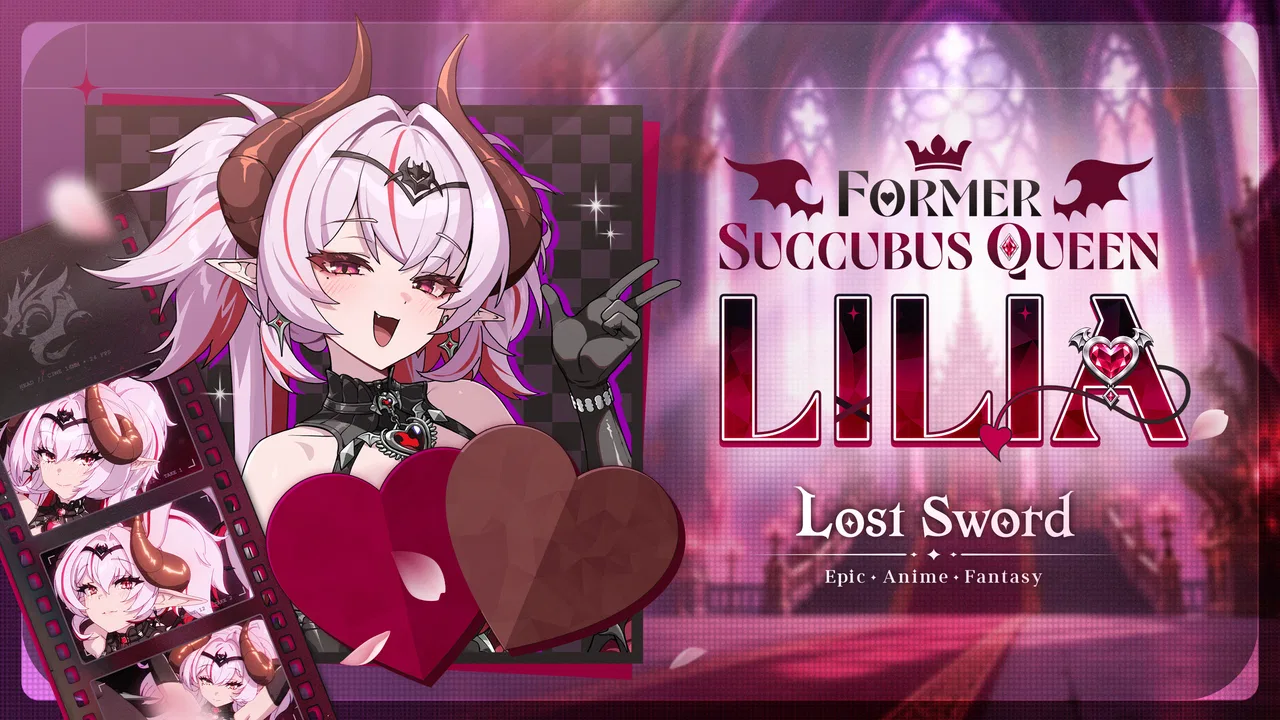
Lost Sword
- 4.3
- Rating
- 1.00M
- Installs
- Free
- Price

 Analysis by App-foxy
Lost Sword is the kind of role-playing game I would suggest to someone who wants a story-led mobile adventure with a strong romantic angle, rather than a quiet, menu-heavy RPG. I spent time with it as a free game from Wemade Connect, and my first impression was that its identity is built around the relationship between action battles and conversations with its female characters. The result is more direct and theatrical than a traditional turn-based role-playing game, but it also asks you to accept an adult tone and a monetization model that will not suit everyone.
The game is listed for a Mature 17+ audience, which is important before you install it. Its presentation is clearly aimed at adults, and the flirting theme is not just a small side detail attached to an otherwise conventional adventure. The romantic interactions sit close to the center of the experience. If you enjoy character-focused games where dialogue, attraction, and combat share the same space, that gives Lost Sword a clear reason to exist. If you are looking mainly for a relaxed fantasy game for younger players or a purely tactical challenge, I would look elsewhere.
How Lost Sword feels in its current form
At its best, Lost Sword has a useful rhythm: move through an adventure, engage with its cast, then return to the action with a better sense of who these characters are. I found that combination more engaging than a game that treats its story as a few disposable lines between battles. The “Action X Flirting” idea gives the game a recognizable personality, even if the balance between those two sides will depend heavily on what you personally enjoy.
You May Also Like

 Blood Strike: 2.5 Anniversary
Blood Strike’s Loadouts Turn Every Drop Into a Tactical Gamble
A close look at Blood Strike’s custom loadouts: how fast access to signature weapons reshapes its battle royale rhythm, rewards preparation, and narrows the gap between fights.

 Pandora - Music & Podcasts
Pandora’s Music Is Easy to Start, but Harder to Recover
Pandora’s strength is its low-effort path from a seed to a station. Its weak spot is how much confidence it asks you to place in connection, setup, and quiet recovery.

 8 Ball Pool
 Is Built on Rivalries, Rematches, and Routine
A close look at the rivalries, rematches, shared routines, and unanswered safety questions that turn a quick pool match into a persistent mobile community.

 Samsung Music
’s Quiet Strength Is Playing What You Already Own
Its reach comes less from spectacle than from dependable access to a personal library. That simplicity is both the app’s strongest retention engine and its ceiling.

 AccuWeather: Weather Radar
AccuWeather Review: A Quick, Clear Forecast for Everyday Decisions
For everyday plans, the best forecast is the one you can understand quickly. AccuWeather makes rain timing, radar, and local conditions easy to act on, with a few trade-offs.

 Hill Climb Racing
Why Hill Climb Racing Still Turns Crashes Into One More Run
A tiny car, a bumpy hill and one more upgrade: Hill Climb Racing keeps resurfacing because its simple chaos makes every near-miss feel personal.
More From Our News Desk



The combat is the part I would test first if I were deciding whether to keep playing. Mobile RPGs often begin with attractive characters and a dramatic opening, then reveal that the actual battles are repetitive. Lost Sword needs to be judged over longer sessions: does the action remain satisfying when the novelty of the cast wears off, and does character progression make fights feel meaningfully different? I would not install it expecting the deep planning of a classic strategy RPG. Its appeal is closer to an accessible action adventure wrapped around character collection and relationship-driven scenes.
That makes it a good fit for short evening sessions. I can imagine opening it after work, completing a few battles, checking new dialogue, and stopping before the experience becomes a long commitment. The same structure can also make it easy to play in small portions when I have only a few minutes. On the other hand, players who want a complete console-style adventure without recurring progression loops may find the mobile format less satisfying.
The romance system is more than decoration
The romantic side changes how I read the game. In many RPGs, the cast exists to deliver combat abilities, while their personalities are mostly background decoration. Here, the conversations and flirting are part of the appeal, so I pay more attention to which character I am spending time with and why the scene matters. That gives the roster more emotional purpose, but it also means the writing has to work. If the dialogue does not connect with you, a large part of the game’s hook becomes much weaker.
My practical advice is to avoid rushing through every conversation just to reach the next battle. The relationship scenes are where Lost Sword separates itself from a standard action RPG. Skipping them may make progression feel faster, but it also reduces the experience to a more ordinary combat-and-upgrade loop. I would treat the dialogue as part of the main route, not as optional filler.
There is also a useful trade-off for players who prefer efficiency. If you are mainly interested in combat, you can approach the story as a framework around the action and focus your attention on the battles and progression. That will probably make the game feel lighter and more manageable, but it may leave you wondering why this particular RPG is built around flirting in the first place. The game works best when you are willing to engage with both halves.
What the current release tells me
The current version is 1.576.1, and that version number suggests a product that has moved beyond an initial launch build rather than remaining at its earliest state. I would still separate that observation from any promise about future updates: a later version can indicate ongoing maintenance, but it does not automatically tell me how much new content has arrived or how the game will evolve next.
The release date shown for the game is July 8, 2025. That gives the current build a relatively clear point of reference when comparing impressions from older coverage with what a new player sees now. Anyone returning after an earlier installation should check the in-game experience again instead of assuming that first-week impressions describe the present version. At the same time, I would not treat the version number alone as proof that every rough edge has been resolved.
For Android users, the listed minimum requirement is Android 7.0. That is a reasonably broad compatibility floor, but compatibility on paper is not the same as a perfect experience on every device. Action-heavy scenes, animated presentation, and long sessions can expose differences between older and newer phones. I would leave enough storage and close unnecessary background apps before judging performance, especially on an older handset.
The game has reached over a million installs, with an average rating of 4.3 from around fifty-nine thousand ratings and roughly three thousand reviews. Those figures tell me there is a substantial audience willing to try its particular mix of action and romance. They do not replace personal testing, though. A popular character-driven RPG can still be a poor match for someone who dislikes its tone, its pacing, or its approach to spending.
Progression, spending, and the daily decision
Lost Sword is free to download, but it includes purchases ranging from $0.99 to $79.99 per item. That range matters more than the word “free” when deciding how to play. I would begin with a strict no-spend approach, learn how quickly the early progression moves, and only then decide whether a purchase improves my experience. Spending immediately makes it harder to tell whether I like the underlying game or simply enjoy the temporary boost.
The most useful habit is to set a personal boundary before the game starts asking for money. For me, that means treating premium currency and character-related purchases as optional rather than necessary. I would also avoid buying something just because a limited opportunity creates pressure. In a character-focused RPG, the desire to strengthen a favorite character can be persuasive, but that emotional pull is exactly why a fixed budget helps.
A realistic everyday routine would look like this: I play a few stages during a commute or lunch break, use the available time to advance one clear objective, and save longer story conversations for the evening. That approach prevents the game from taking over the day and makes it easier to notice whether I am enjoying the action or merely checking in out of habit. If progress starts to feel like a chore unless I spend, that is the point where I would pause rather than automatically pay.
Players who enjoy optimizing a roster may find the spending system easier to accept because they can treat upgrades as a long-term hobby. Players who want a fully predictable, one-time purchase will probably be happier with a premium RPG that does not combine free entry with optional item purchases. Lost Sword is not the right choice for someone who wants to remove all monetization decisions from the experience.
Where it stands beside other mobile RPGs
Compared with a conventional turn-based RPG, Lost Sword feels more immediate and more dependent on presentation. A turn-based alternative is usually better when I want to study a battlefield, plan several moves ahead, and make every action deliberately. Lost Sword is more appealing when I want the momentum of action and the distraction of character conversations without stopping to calculate every turn.
Compared with a pure action game, it gives me more reason to care about the cast. The relationship layer adds context between battles, and the flirting theme makes the game’s tone unmistakable. The compromise is that neither side may satisfy specialists completely: a dedicated action player could find the role-playing structure slows the pace, while a story-first player could want deeper choices and more substantial character development.
It also differs from a quiet visual novel because combat is not merely a brief interruption. I would choose Lost Sword when I want dialogue supported by active play, not when I want to spend an entire session reading. Conversely, if my priority is nuanced branching storytelling, a narrative-focused game may deliver more depth with less emphasis on progression and combat.
Small choices that improve the experience
My first recommendation is to pace the game around attention, not around every available reward. Complete a manageable objective, read the associated character material, and stop when the session still feels enjoyable. This is especially useful in a free RPG, where an endless stream of tasks can make the game feel like a checklist. Short, intentional sessions help me distinguish genuine interest from routine.
Second, I would decide early whether I am playing for the story, the action, or an even split. That choice affects how I spend time and resources. A story-focused player should avoid skipping relationship scenes, while a combat-focused player should be more selective about dialogue and concentrate on a small group of useful characters. Trying to maximize everything at once is the fastest way to turn a flexible game into a demanding one.
Third, I would not judge the cast only by first impressions. Character-driven RPGs often encourage immediate favorites, but the better question is which characters continue to interest me after several interactions. I would use that answer to guide attention instead of chasing every new option. This does not require spending money, and it keeps the romantic side personal rather than turning it into a race to collect everything.
Finally, I would keep an eye on how the newest version treats returning players. The current build is the one new users should experience, but long-term satisfaction depends on whether ongoing changes make progression clearer, keep the action fresh, and give established players reasons to return. I would watch for meaningful additions to the story and cast, smoother onboarding, and a better balance between optional purchases and ordinary play. Those are more important signals than a version number by itself.
Who should install it, and who should skip it
I recommend Lost Sword to adults who enjoy mobile role-playing games with a visible romantic component, attractive character-driven presentation, and action between conversations. It is particularly suitable for someone who wants a free starting point and is comfortable deciding for themselves whether optional purchases are worth it. The game’s strongest quality is its clear personality: it does not hide what kind of fantasy it is trying to deliver.
I would skip it if I want a child-friendly game, a purely competitive action title, or a slow, intellectually demanding tactical RPG. I would also be cautious if I dislike flirtatious writing, recurring progression, or the possibility of expensive individual purchases. Those are not minor details that can be ignored; they shape the way the game feels from the beginning.
After considering the current release, broad Android compatibility, established player interest, and free entry, I see Lost Sword as an easy game to sample but a more selective game to commit to. Its action-and-romance combination is distinctive enough to attract the right audience, yet specific enough to push away everyone else. My main advice is to play it for its character interactions first, then decide whether the combat and progression deserve a longer place on your phone.
For me, the game is most successful when I treat it as a focused mobile pastime rather than an all-purpose RPG. I can enjoy a few battles, follow a relationship scene, and return later without pretending it replaces every other kind of role-playing game. Wemade Connect has given it a recognizable direction, and the current version provides a sensible entry point. Just keep the Mature 17+ rating, the optional spending, and the romance-centered design in mind before downloading Lost Sword.
FAQs for Lost Sword
01What is Lost Sword, and what kind of game is it?
Lost Sword is a mobile role-playing game built around fantasy combat, character collection, and story-driven progression. During my time with the game, the main loop involved completing stages, improving heroes, unlocking equipment, and assembling a team suited to different battles. It is aimed at players who enjoy anime-inspired visuals, strategic team building, and regular progression rather than a short, one-time adventure.
02Is Lost Sword free to download and play?
Lost Sword can generally be downloaded and played without an upfront purchase, but it may include optional in-app purchases. These purchases can provide premium currency, character summons, resources, or progression-related items. Free players can still experience the main content, although advancing quickly or collecting specific heroes may require more patience. Before downloading, check the store listing for the current pricing, supported payment methods, and any regional restrictions.
03Does Lost Sword require an internet connection?
Yes, Lost Sword should be treated as an online game. An internet connection is normally needed to start the application, synchronize progress, access events, use account features, and participate in content that depends on live servers. I would not recommend installing it for offline play, because losing connectivity can interrupt battles or prevent access altogether. A stable Wi-Fi or mobile-data connection is preferable for smoother loading and fewer disconnections.
04Is Lost Sword suitable for beginners, and is it difficult to learn?
Lost Sword is relatively approachable for newcomers, especially during the opening chapters, where the game introduces combat, character upgrades, equipment, and team formation step by step. However, later stages can require more careful planning, including selecting suitable heroes, improving abilities, and managing limited resources. Players unfamiliar with role-playing or hero-collection games may need time to understand the systems, but the basic controls are easy to pick up.
05What should I check before downloading Lost Sword on Android or iOS?
Before downloading Lost Sword, check that your device meets the minimum operating-system and hardware requirements, since modern 3D graphics may perform poorly on older phones or tablets. You should also confirm that enough storage is available for the initial installation and future updates. Review the game’s age rating, data-collection information, in-app purchase settings, and regional availability. Because the game relies on online services, also verify that your connection is reliable.
Pros
- Fast-paced combat feels responsive and satisfying.
- Stylish character designs give the game a distinctive look.
- Frequent rewards make early progression feel generous.
- Multiple heroes encourage experimentation with different playstyles.
- Short missions are convenient for quick gaming sessions.
Cons
- Later stages can become repetitive without more varied objectives.
- Some upgrades require considerable grinding to unlock.
- The interface may feel crowded on smaller phone screens.
- Power differences between characters can affect team variety.
- Online features may be frustrating with an unstable connection.

Lost Sword
Gallery